Standard Form 1442 is the cover sheet of most federal construction solicitations, and the offer half of it is yours to fill in. This page walks through it block by block, shows where the FAR requires it, and lists the mistakes on the form that can get a sealed bid rejected.
Not legal advice: this article explains the general rules; the solicitation of each contract governs.
Key terms
- SF 1442
- Standard Form 1442, the two-page federal form that serves as solicitation, offer and award for construction, alteration or repair contracts. The current edition is revision 12/2022.
- Acceptance period
- The number of calendar days during which the Government may accept your bid at the stated price. You insert it in Block 17, at least equal to the minimum in Block 13d.
- Nonresponsive bid
- A bid that fails the essential requirements of the invitation, such as a short acceptance period or an added condition. Under FAR 14.404-2 it is rejected.
What SF 1442 is and when you will see it
SF 1442 is a two-page Government form titled Solicitation, Offer, and Award (Construction, Alteration, or Repair). The current edition is revision 12/2022, listed in the GSA forms library under FAR 53.236-1(d).
It does three jobs on one sheet. The front page is the solicitation, filled in by the contracting office. The back page holds the offer, which you complete, and the award, which the contracting officer completes if your offer is accepted.
FAR 36.701(a) makes it the standard cover form for construction contracts expected to exceed the simplified acquisition threshold, and allows it below that threshold too. Below the threshold, FAR 36.701(b) also allows Optional Form 347. So on a small job, for example a roof replacement at a federal warehouse, you may see either form. Read the one in your package.
The form says at the top that the offer section must be fully completed by the offeror. It also notes that in a sealed bid solicitation, the words offer and offeror mean bid and bidder.
The front page: what the Government fills in
You do not write on the front page, but you must read every block. Several of them set rules that bind your offer.
- Block 1, solicitation number: copy it exactly on your envelope or upload and on every page you send.
- Block 2, type of solicitation: a box marked sealed bid (IFB) or negotiated (RFP). This tells you which FAR rules apply to your offer.
- Blocks 7 and 8, issued by and address offer to: block 8 is where your offer must arrive.
- Block 9, for information call: the named contact for questions.
- Block 10, the work: title, identifying number and date of the documents that describe the project.
- Block 11, performance period: how many calendar days after award or notice to proceed you must start and finish, and whether that period is mandatory or negotiable.
- Blocks 12a and 12b, bonds: whether performance and payment bonds are required and within how many calendar days after award you must furnish them.
- Block 13a, due date: number of copies, place, hour and date. In a sealed bid, offers are opened publicly at that time.
- Block 13b, offer guarantee: whether a bid guarantee is or is not required.
- Block 13d, minimum acceptance period: offers giving less than this number of calendar days for Government acceptance will not be considered and will be rejected.
The back page: the offer you complete
Blocks 14 to 20 are yours. Each one matters.
Block 14 takes your name and address with ZIP code, plus your code and facility code. Use the same legal name and address as your SAM.gov registration. Block 15 is your phone number. Block 16 is the remittance address, only if payment goes somewhere other than Block 14.
Block 17 is the price commitment. You agree to do the work at the prices you state, in strict accordance with the solicitation, if the Government accepts in writing within the number of calendar days you insert. The amounts usually go on the bid schedule attached to the solicitation, so check where the package asks for them.
Block 18 is a one-line promise: you agree to furnish any required performance and payment bonds. If Block 12a says yes, line up your surety before you sign.
Block 19 is the acknowledgment of amendments: the number and date of each amendment you received. Block 20 is the name and title of the person authorized to sign, the signature and the offer date.
| Block | What you enter | What to watch |
|---|---|---|
| 14 | Name and address with ZIP code, code and facility code | Same legal name and address as your SAM.gov registration |
| 15 | Telephone number | A line someone answers during the evaluation |
| 16 | Remittance address | Only if payment goes somewhere other than Block 14 |
| 17 | Number of calendar days for Government acceptance | At least the Block 13d minimum; blank means you accept the minimum |
| 18 | Agreement to furnish required bonds | Have your surety lined up if Block 12a calls for bonds |
| 19 | Number and date of each amendment received | Every amendment, or the bid may be nonresponsive |
| 20 | Name and title of signer, signature, offer date | Hand signature, and initials on each erasure or change |
The acceptance period in Block 17
The acceptance period is how long the Government can hold your price and still accept it. The form asks you to insert a number of calendar days equal to or greater than the minimum stated in Block 13d.
If you leave the space blank, the form itself says you accept the minimum in Block 13d. That is the safe default. If you write a smaller number, your bid offers less than the Government asked for.
For construction, the FAR does not use the separate minimum acceptance period provision that applies to other sealed bids. FAR 14.201-6(j) excludes construction from it. The minimum lives on the form itself, in Block 13d, as FAR 36.701(a) requires.
Before you commit, ask your supplier how long their material quotes hold. If steel or roofing membrane prices are good for 30 days and Block 13d asks for 90, that gap is your risk, not the Government's.
Acknowledging amendments and signing
Amendments change the solicitation after it is issued: a new drawing, a changed due date, an added bid item. You must acknowledge every one. Block 19 is the place on the form: list each amendment number and its date.
The solicitation provision 52.214-3 also allows other ways: signing and returning the amendment itself, or a letter, and fax or email only if the solicitation allows bids by those means. Whatever the method, the acknowledgment must reach the Government by the time and at the place set for receipt of bids.
Signature comes next. Under 52.214-18, bids for construction must be on the Government forms or copies of them and signed by hand, and the person signing must initial each erasure or change on any bid form. Type the signer's name and title in Block 20a so nobody has to guess who signed.
A practical routine: the night before the due date, search the posting on SAM.gov for any amendment you have not downloaded. Then check that each one appears in Block 19 with the right number and date.
Form errors that can make a bid nonresponsive
In sealed bidding, FAR 14.301(a) says a bid must comply in all material respects with the invitation to be considered for award. FAR 14.404-2(a) adds that a bid failing the essential requirements of the invitation shall be rejected. Only defects of form, the minor informalities of FAR 14.405, can be cured or waived.
Here are the problems on or around SF 1442 that the FAR names as grounds for rejection:
- An acceptance period shorter than the Block 13d minimum, which the form says will be rejected.
- A condition you add that changes the solicitation or limits your liability, for example a price good only if a certain supplier delivers. FAR 14.404-2(d) requires rejection.
- A missing bid guarantee when Block 13b says one is required. FAR 14.404-2(j) requires rejection, subject to the exceptions in FAR 28.101-4.
- An item left unpriced when the solicitation requires bids on all items. Clause 52.214-18(c) says that failure disqualifies the bid.
- An alternate bid the solicitation did not authorize. Under 52.214-18(d), it is not considered.
What can still be cured: minor informalities
Not every slip is fatal. FAR 14.405 defines a minor informality as a matter of form, not substance, with a negligible effect on price, quantity, quality or delivery. The contracting officer then either lets you cure it or waives it.
Two of its examples sit right on SF 1442. A missing signature is minor only if other material in the bid shows you meant to be bound, such as a signed bid guarantee or a signed cover letter identifying the bid, or if your firm had formally authorized printed or stamped signatures before bid opening.
A missing amendment acknowledgment is minor only if the bid clearly shows you received the amendment, for example you priced an item it added, or if the amendment has no or a negligible effect on price, quantity, quality or delivery. An amendment that changes the scope or the price does not fit that test.
Do not plan on any of this. It is the contracting officer's call, case by case. Sign Block 20 and fill Block 19 every time.
A last check before you send
Five minutes with the form, the solicitation and the amendment list, in the order below, catch most form errors before they reach the bid opening.
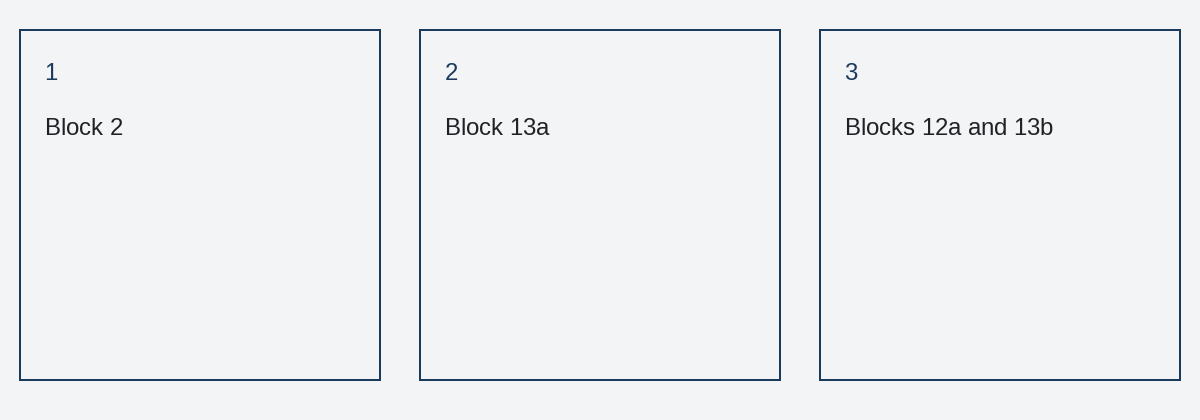
Checking SF 1442 before you send it
- Block 2. Confirm sealed bid or negotiated, so you know whether the sealed bid opening and late bid rules apply.
- Block 13a. Check the due hour, date, place and number of copies required.
- Blocks 12a and 13b. Check the bonds and the bid guarantee, and have your surety's letter in hand.
- Block 17. Enter a number of days at least equal to Block 13d, or leave it blank.
- Block 19. List every amendment with its number and date.
- Block 20. Enter name and title, sign by hand, date it, and initial every correction.
Frequently asked questions
Can a small construction job come without SF 1442?
Yes. FAR 53.236-1(e) and FAR 36.701(b) allow Optional Form 347 for construction contracts below the simplified acquisition threshold. Above it, FAR 36.701(a) calls for SF 1442.
Do I sign the award blocks at the bottom?
Usually not. Block 29 states that the contractor is not required to sign the award, while Block 28, used for a negotiated agreement, asks the contractor to sign and return copies. The contracting officer marks which one applies.
Where do I write my price on SF 1442?
Block 17 holds the price commitment and an amounts space, but most construction packages carry a separate bid schedule with line items. Follow the solicitation's instructions on where prices go.
What if I find an amendment after I already sent my bid?
Clause 52.214-3 lets you acknowledge it by letter, or by fax or email if the solicitation allows those means, as long as it arrives by the time set for receipt of bids. After that time, the late bid rules apply.
Sources and republications
The dates below concern links. They do not certify a full substantive review; claims and applicable versions still need review. Article review record.
- Standard Form 1442 (Rev. 12/2022), Solicitation, Offer, and Award (Construction, Alteration, or Repair), GSA, link checked on
- GSA Forms Library, SF 1442, Solicitation, Offer, and Award (Construction, Alteration, or Repair), link checked on
- FAR 36.701, Standard and optional forms for use in contracting for construction or dismantling, demolition, or removal of improvements, link checked on
- FAR 53.236-1, Construction, alteration, or repair (forms), link checked on
- FAR 14.201-6, Solicitation provisions, link checked on
- FAR 52.214-3, Amendments to Invitations for Bids, link checked on
- FAR 52.214-18, Preparation of Bids-Construction, link checked on
- FAR 14.301, Responsiveness of bids, link checked on
- FAR 14.404-2, Rejection of individual bids, link checked on
- FAR 14.405, Minor informalities or irregularities in bids, link checked on